

قامت محمية الأمير محمد بن سلمان الملكية، كجزء من مهمتها في إعادة الحياة الفطرية للجزيرة العربية، بإعادة توطين طائر الحبارى الآسيوي في المحمية، بعد غياب دام أكثر من 35 عامًا عن المحمية، وذلك في إطار مساعيها لإعادة الحياة الفطرية في شبه الجزيرة العربية.
وتأتي هذه الخطوة في إطار نهج مُجدّد قائم على أسس علمية للحفاظ على طائر لطالما شكّل جزءًا من الحياة الثقافية في شبه الجزيرة العربية على مدى آلاف السنين.
وجرى إطلاق 20 طائر حبارى آسيوي داخل محمية الأمير محمد بن سلمان الملكية، في إطار التعاون المستمر بين المحمية، والمركز الوطني لتنمية الحياة الفطرية، ومؤسسة الأمير محمد بن سلمان للحفاظ على الحبارى؛ الذي يهدف إلى إنشاء مجموعات برية مستدامة من طيور الحبارى الآسيوية في المملكة.
وتنتشر أسراب الحبارى الآسيوي المهاجرة والمقيمة تاريخيًا في المنطقة الممتدة من مصر إلى الصين، واعتاد هذا النوع على التكاثر بأعداد كبيرة في المملكة، بينما كانت الطيور المهاجرة تقضي فصل الشتاء في أنحاء واسعة من شبه الجزيرة العربية، أما اليوم فيُصنّف الاتحاد الدولي لحفظ الطبيعة، الحبارى الآسيوي ضمن قائمة الأنواع المهددة بالانقراض في جميع أنحاء شبه الجزيرة العربية، مع استمرار انخفاض أعداده على الرغم من الجهود المبذولة للحفاظ عليه وإطلاق برامج التكاثر في الأسر على مدى عقود من الزمن، وتخلو المملكة اليوم من المجموعات البرية المقيمة، ولا تُشاهد الطيور المهاجرة في سمائها إلا نادرًا على طول حدودها الشمالية والشرقية.
وقال الرئيس التنفيذي لمؤسسة الأمير محمد بن سلمان للحفاظ على الحبارى أوليفييه كومبرو: «تمنح عملية إطلاق طائر الحبارى الآسيوي في محمية الأمير محمد بن سلمان الملكية فرصة لمؤسسة الأمير محمد بن سلمان للحفاظ على الحبارى بالتعاون مع الشركاء؛ لاختبار تقنيات استعادة الحياة الفطرية، وتوليد البيانات اللازمة لتوجيه إستراتيجيات الإطلاق المستقبلية في المملكة، حيث زُودت 10 طيور بأجهزة تتبع عبر الأقمار الصناعية؛ مما يوفر بيانات أساسية حول قدرة الطيور التي أعيد توطينها على الحياة في البرية، وأنماط حركتها، واستخدامها للموائل، والتهديدات التي تواجهها»، مشيرًا إلى أنه ستجري الاستفادة من هذه المعلومات في عمليات الإطلاق المستقبلية، ولزيادة أعداد الطيور على المدى الطويل في المملكة والمنطقة.
وتسهم الإدارة البحرية والبرية طويلة الأجل في المحمية في تنفيذ عمليات ترميم شاملة للموائل الطبيعية على مساحة تبلغ 24,500 كيلومتر مربع، فيما يعزّز برنامج مفتشي البيئة المتقدم، مدعومًا بالمشاركة المجتمعية الفاعلة، في توفير البيئة والحماية اللازمة لدعم جهود إعادة التوطين على نطاق واسع.
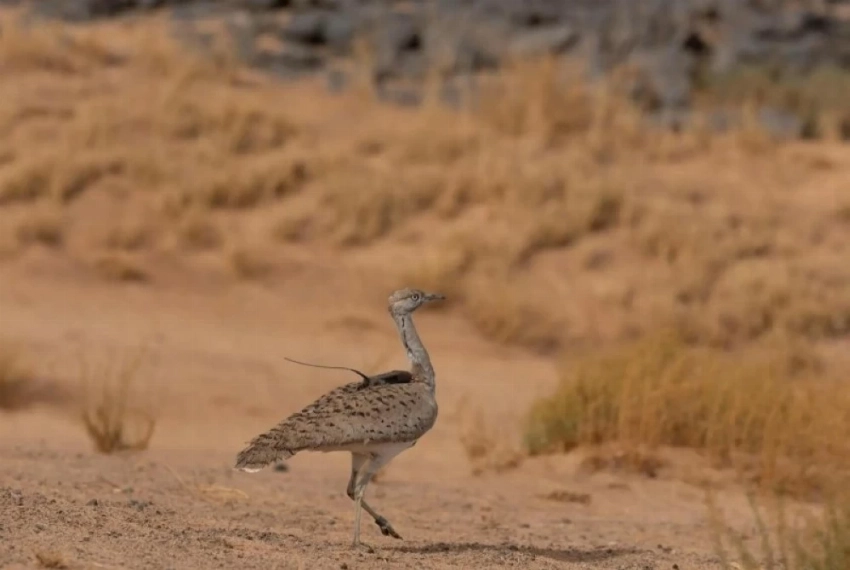
والصيد بالصقور في شبه الجزيرة العربية، الذي تُعد طيور الحبارى أبرز طرائده جزءٌ أساسي من مشهد الحياة الثقافية في المنطقة منذ آلاف السنين.
وأدرجت منظمة اليونسكو هذا التراث الإنساني الحي ضمن قائمتها للتراث الثقافي غير المادي في عام 2021، ولطالما تعايشت المجتمعات المحلية مع الدورات الموسمية في الطبيعة، بما يضمن القيام بالصيد في أوقات محددة فقط للحفاظ على استدامة هذا النوع من الطيور، ومع ذلك أدت الضغوط الناجمة عن فُقدان الموائل والصيد غير المستدام والصيد الجائر غير المنظم إلى انخفاض سريع في أعداد طيور الحبارى منذ منتصف القرن العشرين.
ولمعالجة هذه المشكلة، أنشأ الأمير سعود بن فيصل -رحمه الله-، أول مركز أبحاث متخصص بإكثار الحبارى في الطائف عام 1985، الذي أسهم بدور رائد في تطوير أساليب التكاثر الفعالة في الأسر.
وبالرغم من انتشار مراكز إكثار الحبارى التي تعمل في جميع أنحاء منطقة الخليج العربي، والعدد الكبير من الطيور التي يتم إنتاجها في الأسر، إلا أن إعادة إنشاء مجموعات برية مكتفية ذاتيًا أمر بعيد المنال، وتتمثل رسالة مؤسسة الأمير محمد بن سلمان للحفاظ على الحبارى في العمل على مواجهة هذا التحدي البارز.
وقال الرئيس التنفيذي لهيئة تطوير محمية الأمير محمد بن سلمان الملكية أندرو زالوميس: «دفعت الأهمية الثقافية والتاريخية الكبيرة لنشاط الصيد بالصقور في شبه الجزيرة العربية وطيور الحبارى الآسيوية، إلى إجراء مجموعة من الأبحاث العلمية الدقيقة في إكثار الحبارى على مدى أكثر من 40 عامًا، ومع زيادة أعداد طيور الحبارى اليوم يتمثل التحدي الأكبر في الوصول إلى معدلات البقاء على قيد الحياة في البرية اللازمة لتأسيس مجموعات مستدامة، ومن خلال استثمارنا وتعاوننا مع مؤسسة الأمير محمد بن سلمان لحماية الحبارى، نلتزم بإعادة توطين مجموعات قابلة للحياة من طيور الحبارى الآسيوية البرية داخل المحمية وفي جميع أنحاء المملكة».
وتُعدّ الحبارى الآسيوية النوع الثالث عشر الذي يُعاد توطينه في محمية الأمير محمد بن سلمان الملكية ضمن برنامج إعادة الحياة الفطرية الهادف إلى إعادة 23 نوعًا من الكائنات المحلية إلى نطاق انتشارها التاريخي.
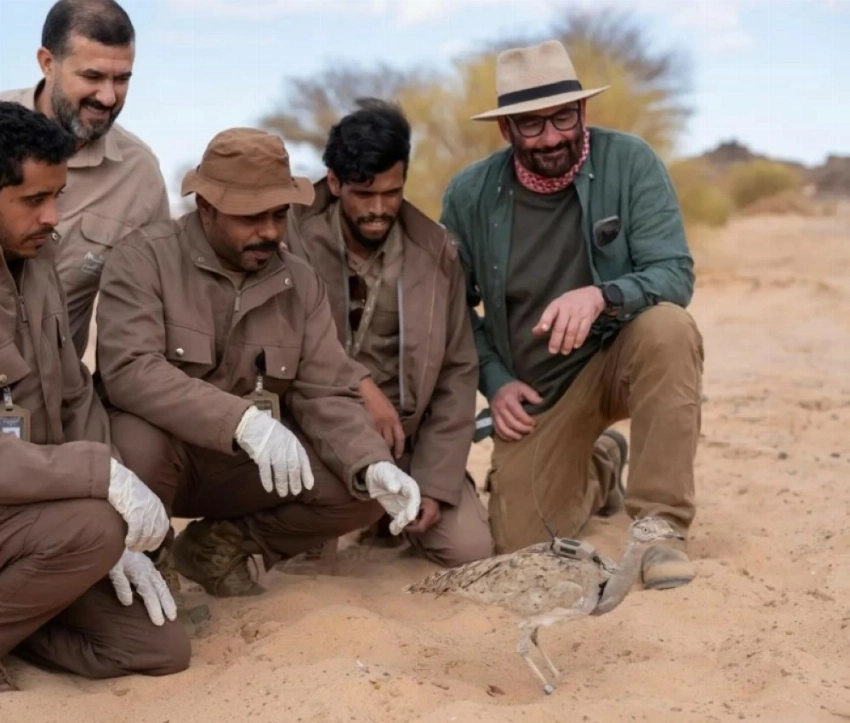
وتأتي هذه الخطوة في إطار الشراكة المستمرة بين المحمية والمركز الوطني لتنمية الحياة الفطرية ومؤسسة الأمير محمد بن سلمان للمحافظة على الحبارى، إلى جانب المحميات الملكية الأخرى، دعمًا لمستهدفات رؤية المملكة 2030 ومبادرة السعودية الخضراء الرامية إلى تعزيز التنوع الحيوي، واستعادة النظم البيئية الصحراوية، وحماية 30% من أراضي المملكة وبحارها بحلول عام 2030.
يُذكر أن المحمية واحدة من ثماني محميات ملكية في المملكة العربية السعودية، وتمتد على مساحة 24,500 كم²، من الحرات البركانية إلى أعماق البحر الأحمر غربًا؛ لتربط بين نيوم ومشروع البحر الأحمر والعُلا، وتُعد موطنًا لمشروع وادي الديسة التابع لصندوق الاستثمارات العامة وأمالا التابعة لشركة البحر الأحمر العالمية.
وتضم المحمية 15 نظامًا بيئيًا مختلفًا، وتغطي 1% من المساحة البرية للمملكة، و1.8% من مساحتها البحرية، إلا أنها تُشكّل موطنًا لأكثر من 50% من الأنواع البيئية في المملكة؛ مما يجعلها واحدة من أغنى المناطق الطبيعية في الشرق الأوسط بالتنوع الحيوي.
وتخضع المحمية لإشراف مجلس المحميات الملكية برئاسة ولي العهد رئيس مجلس الوزراء الأمير محمد بن سلمان بن عبدالعزيز آل سعود -حفظه الله- وهي جزءٌ من برامج المملكة للاستدامة البيئية، مثل: مبادرتا السعودية الخضراء، والشرق الأوسط الأخضر.
The Prince Mohammed bin Salman Royal Reserve, as part of its mission to restore wildlife in the Arabian Peninsula, has reintroduced the Asian Houbara bird to the reserve after an absence of more than 35 years, as part of its efforts to revive wildlife in the Arabian Peninsula.
This step is part of a renewed approach based on scientific foundations to preserve a bird that has long been a part of the cultural life in the Arabian Peninsula for thousands of years.
Twenty Asian Houbara birds were released within the Prince Mohammed bin Salman Royal Reserve, as part of the ongoing collaboration between the reserve, the National Center for Wildlife Development, and the Prince Mohammed bin Salman Foundation for Houbara Conservation; which aims to establish sustainable wild populations of Asian Houbara birds in the Kingdom.
Historically, flocks of migrating and resident Asian Houbara birds have spread across the region from Egypt to China, with this species accustomed to breeding in large numbers in the Kingdom, while migrating birds would spend the winter across vast areas of the Arabian Peninsula. Today, however, the International Union for Conservation of Nature classifies the Asian Houbara as an endangered species throughout the Arabian Peninsula, with its numbers continuing to decline despite efforts to conserve it and the establishment of captive breeding programs over decades. The Kingdom today lacks resident wild populations, and migrating birds are rarely seen in its skies along its northern and eastern borders.
Olivier Combre, CEO of the Prince Mohammed bin Salman Foundation for Houbara Conservation, stated: "The release of the Asian Houbara in the Prince Mohammed bin Salman Royal Reserve provides an opportunity for the Prince Mohammed bin Salman Foundation for Houbara Conservation, in collaboration with partners, to test wildlife restoration techniques and generate the necessary data to guide future release strategies in the Kingdom, where 10 birds have been equipped with satellite tracking devices; providing essential data on the ability of the reintroduced birds to survive in the wild, their movement patterns, habitat use, and the threats they face." He noted that this information will be utilized in future releases and to increase bird populations in the long term in the Kingdom and the region.
The long-term marine and terrestrial management in the reserve contributes to comprehensive restoration operations of natural habitats over an area of 24,500 square kilometers, while the advanced environmental inspectors program, supported by active community participation, provides the necessary environment and protection to support large-scale reintroduction efforts.
Falconry in the Arabian Peninsula, where Houbara birds are considered the most prominent prey, has been an essential part of the cultural landscape of the region for thousands of years.
The UNESCO organization included this living human heritage in its list of intangible cultural heritage in 2021, and local communities have long coexisted with seasonal cycles in nature, ensuring that hunting occurs only at specific times to maintain the sustainability of this bird species. However, pressures from habitat loss, unsustainable hunting, and unregulated poaching have led to a rapid decline in Houbara populations since the mid-20th century.
To address this issue, Prince Saud bin Faisal - may he rest in peace - established the first specialized research center for Houbara breeding in Taif in 1985, which played a pioneering role in developing effective captive breeding techniques.
Despite the presence of Houbara breeding centers operating throughout the Arabian Gulf region and the large number of birds produced in captivity, the re-establishment of self-sustaining wild populations remains elusive, and the mission of the Prince Mohammed bin Salman Foundation for Houbara Conservation is to tackle this significant challenge.
Andrew Zaloumis, CEO of the Prince Mohammed bin Salman Royal Reserve Development Authority, said: "The significant cultural and historical importance of falconry in the Arabian Peninsula and Asian Houbara birds has led to a series of precise scientific studies in Houbara breeding over more than 40 years. With the increasing numbers of Houbara birds today, the biggest challenge is achieving the necessary survival rates in the wild to establish sustainable populations. Through our investment and collaboration with the Prince Mohammed bin Salman Foundation for Houbara Conservation, we are committed to reintroducing viable populations of wild Asian Houbara birds within the reserve and throughout the Kingdom."
The Asian Houbara is the thirteenth species to be reintroduced in the Prince Mohammed bin Salman Royal Reserve as part of the wildlife restoration program aimed at reintroducing 23 species of local organisms to their historical range.
This step is part of the ongoing partnership between the reserve, the National Center for Wildlife Development, and the Prince Mohammed bin Salman Foundation for Houbara Conservation, along with other royal reserves, in support of the objectives of Saudi Vision 2030 and the Saudi Green Initiative aimed at enhancing biodiversity, restoring desert ecosystems, and protecting 30% of the Kingdom's land and seas by 2030.
It is noteworthy that the reserve is one of eight royal reserves in the Kingdom of Saudi Arabia, extending over an area of 24,500 km², from volcanic fields to the depths of the Red Sea to the west; linking Neom, the Red Sea Project, and Al-Ula, and is home to the Wadi Al-Disa project affiliated with the Public Investment Fund and Amala, which is part of the Red Sea Global Company.
The reserve encompasses 15 different ecosystems, covering 1% of the Kingdom's land area and 1.8% of its marine area, yet it is home to more than 50% of the Kingdom's ecological species; making it one of the richest natural areas in the Middle East in terms of biodiversity.
The reserve is overseen by the Royal Reserves Council, chaired by Crown Prince and Prime Minister Mohammed bin Salman bin Abdulaziz Al Saud - may God protect him - and is part of the Kingdom's environmental sustainability programs, such as the Saudi Green Initiative and the Middle East Green Initiative.
ملحوظة: مضمون هذا الخبر تم كتابته بواسطة عكاظ ولا يعبر عن وجهة نظر مصر اليوم وانما تم نقله بمحتواه كما هو من عكاظ ونحن غير مسئولين عن محتوى الخبر والعهدة علي المصدر السابق ذكرة.